The Family at 3719 Mack Court
Angelic Gonzalez came to Cleveland for her father. Gloria Hernandez told detectives that Angelic moved to the city to take care of Miguel Gonzalez, who was sick, and that by January 2023 the family had been in Cleveland less than two years. Hernandez also said Angelic had always been distant from her family. In October 2022 they left an apartment for a house at 3719 Mack Court, in the Brooklyn Centre neighborhood: a two-story wood-frame home with tan siding and white window trim, a dining room, kitchen, bedroom, and laundry room on the first floor, three bedrooms and a full bathroom on the second.
The house filled up. Angelic was 34. Her husband, Anthony Boothe, was 48. Her son Jayden Baez was 16, and her daughter Eyana was eight. Miguel, 70, was father to Angelic and to her brother, Martin Muniz, which made him Muniz's father too.
Muniz trailed a history behind him. Lourdes Martinez, who dated him, told detectives she had known him since December 12, 2019, after meeting him through Facebook, and that they later learned they were second cousins. She said he moved in with his sister Angelic in January 2020, then in with Lourdes herself in mid-January 2020. She described him as very possessive. She said she broke up with him twice, took him back once after visiting him, and at one point bought him a ticket to Texas to stay with family members. He later stayed with her brother; when he slapped her brother's girlfriend, she said, no charges were filed. She also told detectives that Muniz and his three brothers, David, Sergio, and Serafin, had been abused by their stepfather while growing up, though she had been told about it and never witnessed it, because she did not know him then. A detective's affidavit stated that Muniz had a criminal history and had served lengthy prison terms in other states.
He came and went from his sister's homes the same way. Gloria Hernandez told detectives that when another relative put him out, Angelic took him in; that Angelic later told him to leave because he would not get a job or help around the house; and that when he called and said he was moving back in, she let him. She got him work as a mechanic. He quit because he did not like the pay, and he quit the next job as well. By January he had been at Mack Court for several months, apparently living in the basement. Hernandez said Anthony Boothe was especially irritated that Muniz did nothing to help in the house and would not keep a job. Lourdes Martinez told detectives she believed Muniz did not like how Angelic and Anthony raised their children.
Around Thanksgiving, Gloria Hernandez said, she was on a FaceTime call with Angelic when she heard Muniz say that he had "a thumper." Angelic told her brother he had better not have a gun in her house. He said he was only kidding.
On December 18, Muniz messaged a Facebook account called "Jail Break Gaming": "Nothing the end is near bless you my friend." The next day he told another correspondent that he was depressed, without giving specifics about why.
The house watched itself. There were Blink cameras in the first-floor dining room, on the kitchen counter, on a dresser in a second-floor bedroom, and on the exterior wall next to the front door. The porch camera was motion activated and recorded seven-second clips that carried no date and no time stamp. On January 12, Gloria Hernandez said, Muniz argued with Anthony Boothe over sugar in the house.
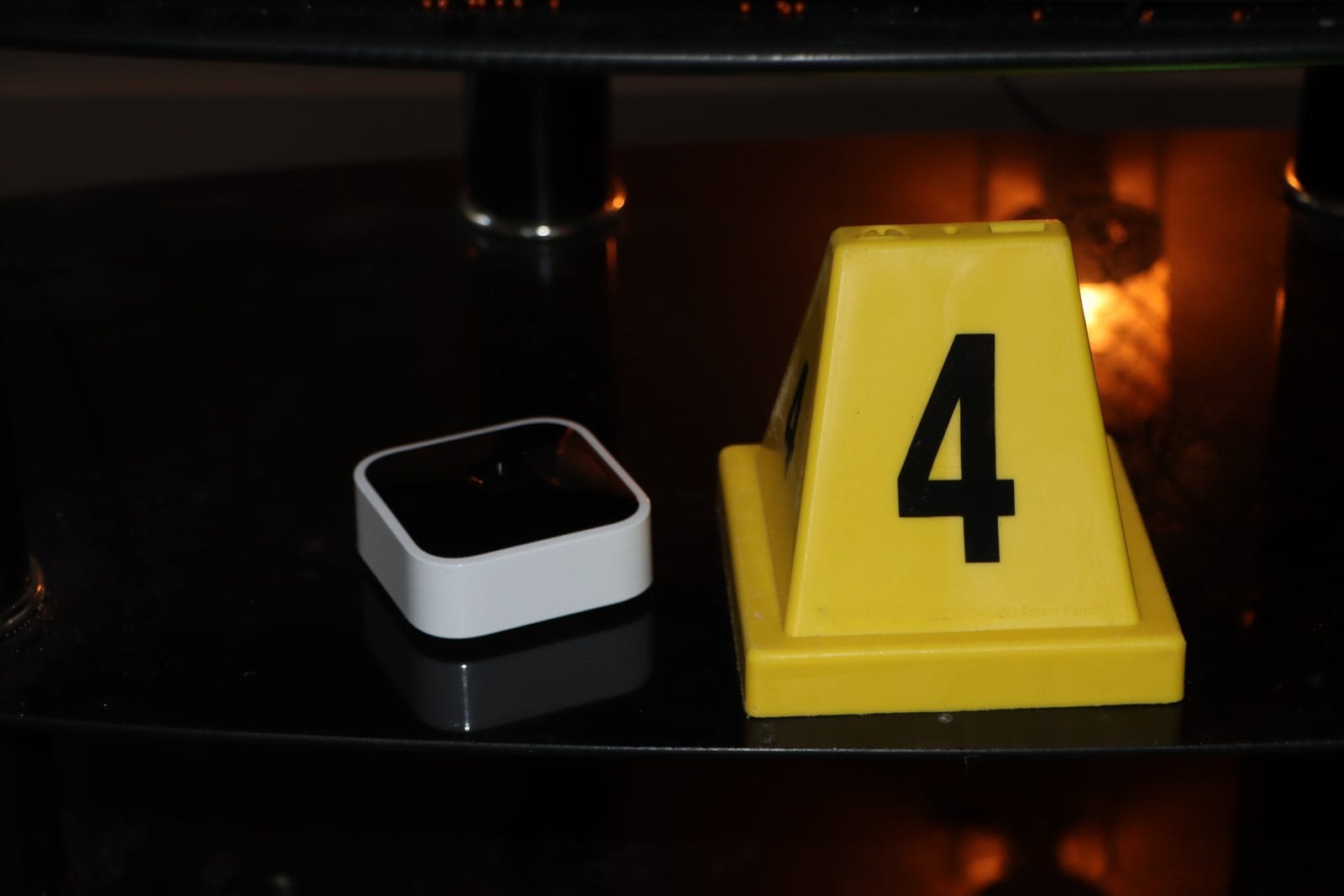
The next evening, the kitchen camera caught a conversation about dinner. Detectives who later reviewed the footage described it clip by clip. Muniz walks through the kitchen asking where the food is at. He comes back through and says there are only three eating. Eyana's voice: "I only had one." Muniz: "pops you ate." He passes through again on the phone. He tells Eyana to sit down. Then Angelic walks into her kitchen and asks what Muniz is talking about, and someone answers that he is talking about the food.
That is the last ordinary thing the cameras hold. In the next clip Muniz walks through the kitchen in a light-colored hooded sweatshirt, and three gunshots are heard. Police would put the shootings at about 7:10 p.m.
The Calls Before the Zone Car
At 6:07 p.m. that Friday, Eyana Boothe placed a FaceTime call to her aunt. Emigdia Gabriel told police about it afterward: the call at 6:07, then two more that she missed, at 6:41 and 6:42. Nobody answered an eight-year-old three times.
Lourdes Martinez answered. She said Muniz called her somewhere between about 5:50 and 6:10 p.m., crying and upset, and told her, "I'm sorry please forgive me, remember I'm always going to love you, but this is going to be the last time I'm going to call you." He hung up. She called back several times, and every call went straight to voicemail.
About 25 minutes later he called her again, on FaceTime video, walking. She described him as calm now, where the first call had been crying. He was wearing a red hoodie with a logo on the left side and a white snow cap. He told her that he fucked up. He told her that he killed the whole family, and he named them for her: his sister Angelie, her husband Tone, her father Angel, a 17-year-old boy, a six-year-old girl. Jayden was 16. Eyana was eight. He said, "I can't believe I just killed my sister." He said he still had two bullets left, and he asked her whether he should kill himself.
She tried Angelic. She tried Angelic's mother. Neither answered. She called other family members and told them to go to Angelic's house with a police escort, and she called the Cleveland police.
The dispatch event was created at 7:48:55 p.m. for 3719 Mack Court, typed in as "Trouble Unknown Cause," with Lourdes Martinez listed as the caller. One comment survives exactly as it was entered: "CLR SIS HER EX BOY JUST CALLED AND NOT HER THAT HE RUST KELLED HIS SISTER AND TWO CHILDREN, AND THEIR FATHER." Another described him walking, wearing a red hoody, possibly jogging. Another: a gun with two bullets left in it. Another: "CR STS ML CALLED UPSTAIRS AND CRYING." The incident comments also state that the male said he threw the gun. Zone cars were dispatched to Mack Court shortly after. The 911 calls themselves were later burned onto a DVD and entered into the Homicide Unit property book.
Two of those calls are below, as the city released them. Telephone numbers and a date of birth have been muted; nothing else is altered.
19:46:44 — Lourdes Martinez calls Cleveland police from Chicago. "I got a phone call from my ex-boyfriend. He just killed his whole family."
19:47:12 — twenty-eight seconds later, a second caller reaches the same dispatch centre with the same account, relayed through the family.
It was snowing that night, 30 degrees, with a north wind at 14 miles an hour, by the crime scene unit's own weather entry. At 7:48 p.m., the same minute the dispatch event was created, a man flagged down Cleveland police zone car 2A24 near West 44th Street and Clark Avenue. He approached the officer and P.O. Brown at the corner and told them he had done something bad, and that they might want to handcuff him before he told them. One narrative preserves the words: "handcuff me before I tell you what I did."
Bodycam, 19:47:13. Zone car 2A24 at West 44th Street and Clark Avenue, minutes after the shootings on Mack Court. Cleveland Division of Police — the black block is the department's own redaction.
The officers put him in handcuffs. He told them he had shot and killed five people at 3719 Mack Court. He said his identification was in his wallet inside his hoodie, and an officer found it there: Martin Muniz, from Illinois. He was detained in a red Echo hoodie and a white beanie, black boots, a beard, the same red hoodie and white cap Lourdes Martinez had just described to the call-taker. His arrest time is recorded as 7:48 p.m., the minute the warning about him arrived.
Inside the House
The cars reached Mack Court within minutes. The dispatch chronology has officers arriving at 7:54, going inside at 7:56, and, seconds later, the entry that nobody knew whether anyone was in there. The report of the entry records that officers knocked, were approved to enter, and unlocked the door. At 7:57 the chronology says fire EMS was needed. At 7:58: two people breathing. One person upstairs.
The first officers through wrote down what they saw on two floors: two juveniles, one male and one female, shot in the living room; two people, one male and one female, shot in a bedroom; one male shot upstairs, in a bedroom doorway. At 8:07 an operator typed "A24 - MULTIPLE VICTS SHOT." A minute later the count came back from the zone car: "5 TOTAL VICTIMS - 3 DECEASED PER ZONE CAR." At 8:09: "1 JUVENILE TO HOSP." During the protective sweep to locate and treat the victims, investigators noticed a tablet on a bed in the basement, and the premises were secured in anticipation of a search warrant.
The crime scene unit documented the house afterward, 219 photographs of it. Jayden Baez was face up in a recliner in the north living room, in a white tank top and blue shorts and black eyeglasses, a black-and-red blanket resting against his right side, a black iPhone on the recliner next to him, a defect visible on his forehead. Behind the recliner lay a pair of pink eyeglasses with suspected blood on them. A white left-foot sandal with suspected blood sat on the floor next to the sofa; its mate was on the floor behind the recliner. Another cell phone lay on the couch. Two spent XP 9mm Luger cartridge casings were on the living room floor, and the unit measured them into place: one four feet eleven inches south of the north wall and eight feet east of the west wall, the other four feet nine inches south of the north wall and flush against it.
Angelic Gonzalez was on the bed in the west first-floor bedroom, in a blue shirt and black sweatpants, an iPhone under her right forearm. A pair of black eyeglasses lay under a blue towel on the east side of the bed. A spent bullet was recovered from inside the pillow beneath her. Miguel Gonzalez lay on his right side just inside the doorway of the second-floor north bedroom, two defects to his head, a spent bullet on the floor next to the bed. Six spent 9mm Luger casings were collected in all. On the closet door of the second-floor southeast bedroom the unit photographed a suspected bloody handprint, with more suspected blood on the closet wall and the bedroom door, and detectives swabbed all three. The pink eyeglasses, two of the Blink cameras, the phones, and the iPad from the basement all went into evidence. No latent prints were requested.
Angelic, Jayden, and Miguel were pronounced dead at the scene. Forensic pathologist Dr. Elizabeth Mooney found that Angelic had sustained two gunshot wounds to the head, Jayden a single gunshot wound to the center of the forehead, Miguel a single gunshot wound. Angelic's manner of death was recorded as homicide.
Two people left the house alive. EMS unit 2 carried Eyana Boothe to MetroHealth; EMS unit 1 carried her father. Both arrived on their backs, intubated, unable to speak. A trauma surgeon described Eyana's injuries as a gunshot wound to the back of her head with multiple skull and cervical spine fractures; she was moving all four extremities when she arrived. Anthony Boothe had a gunshot wound to the head with multiple facial fractures, two suspected bullet defects on his cheeks and one at his lower lip into his mouth, and a scan detected a suspected spent bullet inside his brain.
Medical staff told officers that the adult, Antonio, might not survive, and that the juvenile was critical but had stable vital signs and a better chance. At 9:43 the following night, Anthony Boothe was pronounced dead at MetroHealth. Dr. Mooney found he had suffered two gunshot wounds. Two days after the shootings, officers reached his sister, Lorretta Boothe, and told her that her brother had died from injuries sustained in a shooting; she said the people she was speaking for had already heard about it through the news. She agreed to be the family's point of contact, and the officers left her their information. Eyana survived her injuries and was recovering.
All of that was still ahead on Friday night. At the hospital, a social worker told officers she had already been in contact with some of the victims' relatives, and several of them were gathered in a designated family waiting room. Emigdia Gabriel identified herself as an aunt. She told the officers about the FaceTime call at 6:07 and the two calls she missed, and she became emotional and said she felt guilty, because she had been at dinner and had not answered. Then the officers told the family who had died at the scene and the condition of the two still being treated, and a city-issued wearable camera recorded it.
The Route, the Car and the Missing Gun
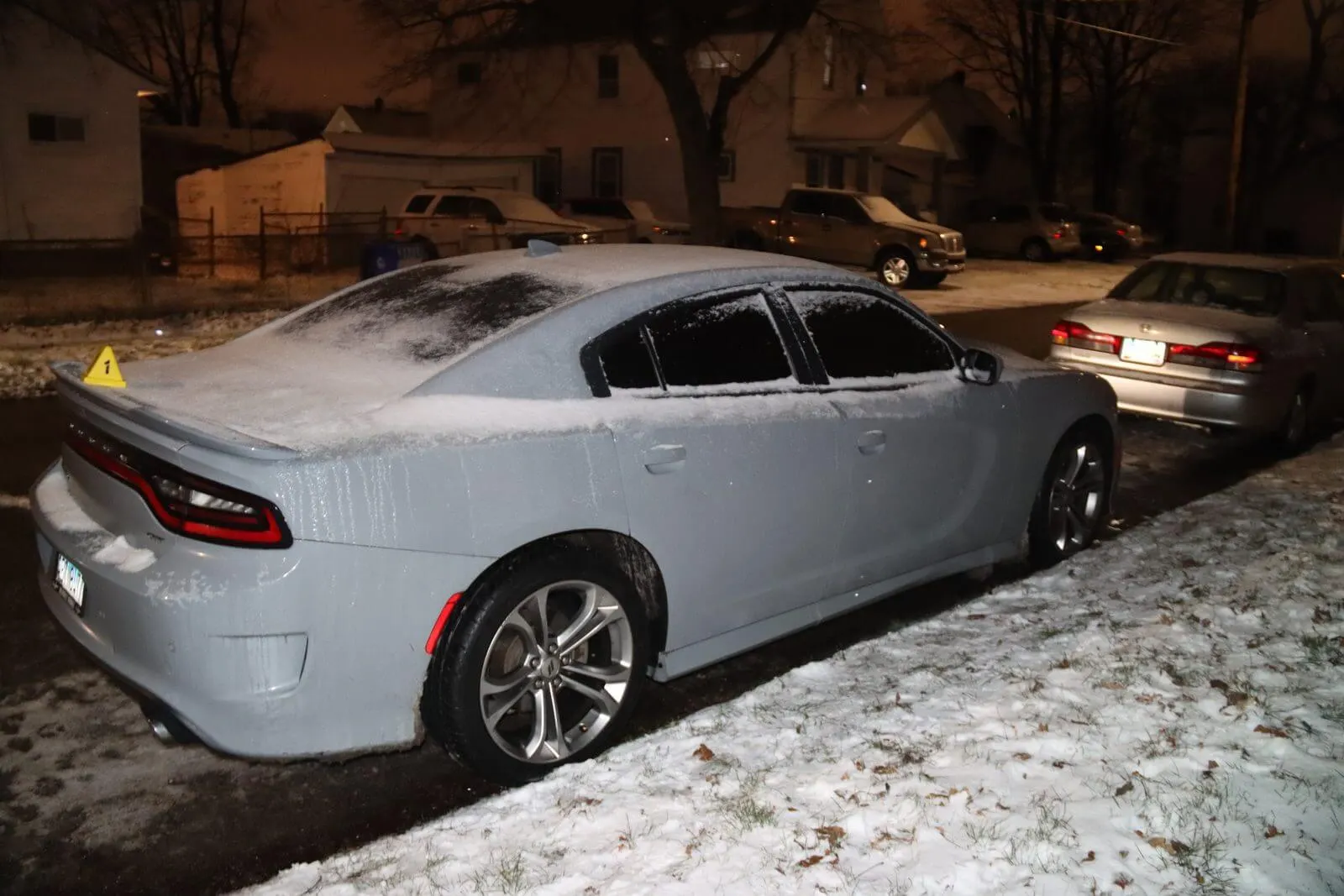
Angelic Gonzalez's Dodge Charger was found that night at Carlos Avenue and West 48th Street, unoccupied, parked on the southeast corner facing east, Illinois plate AE78477, registered to her. Over the air, the missing car had been a blue Charger with Illinois plates, belonging to one of the deceased victims and gone from the scene. The car the crime scene unit photographed on the corner was a gray 2021 Charger. Both descriptions attach to the same registration; the dispatch traffic and the scene documentation never came to agree on the color. The car was towed to Cleveland Impound Lot 2.
Detectives alleged the route: Muniz took his sister's car after the shootings, drove it to that corner, parked it, and walked until he found a police car. The driveway camera at Mack Court had recorded a male in a red hooded sweatshirt walking down the driveway with a vehicle parked in it, then walking back up; in the clip where Cleveland police arrive, the vehicle is no longer in the driveway. The police log traced the walk: north on 45th Street to Storer, west on Storer to 52nd, north on 52nd to Clark, east on Clark until he flagged down the officers on 44th. An operator's note that night reads, "ML WAS ON FOOT ENTIRE TIME CAMERAS HAVE HIM."
The search for the gun started at once. A resident at the corner of Mack Court and 39th Street let officers watch a door camera that showed only vehicles passing, no one on foot. Henry Sanders, on West 47th, saw officers knocking and agreed to let them check his Ring camera once he had time to get dressed. Parma police put a drone up over West 46th and Marvin. A K-9 searched for a firearm and, per the sergeant's note, found nothing.
In the rear seat of the zone car, after Officer Garnback advised that he had been read his Miranda rights, Muniz talked. "They made me upset asking me for money to pay a water bill. I have been out for 4 years and I can't do it out here." He looked at an officer and said, "I am not crazy." Then, immediately: "He should be dead, I will have to find a way to get out to finish it." The log records that he admitted driving the Charger and having a firearm in it, and that he said he threw the gun. He would not, or could not, say where. He said he did not remember the path he took. The cameras had him the entire way.
He was photographed standing against a Second District zone car in a red zip-up jacket, black overalls, a green shirt, and a grey beanie, front, back, and both profiles, both hands, all of it before a gunshot-residue test was performed on him. He consented to a buccal swab and signed the form.
Five days after the shootings, homicide personnel canvassed from West 48th and Charles to West 44th and Clark for the firearm and the cellphone Muniz was reported to have carried. Officer Taylor found a broken black iPhone in a field next to 3288 West 52nd Street, and Detective Katelyn Douglas came out to swab and collect it. The house across the street had a camera on its front, but the resident told police the stored footage went back only to four o'clock that same morning. She had not paid the camera bill, so the video no longer saved.
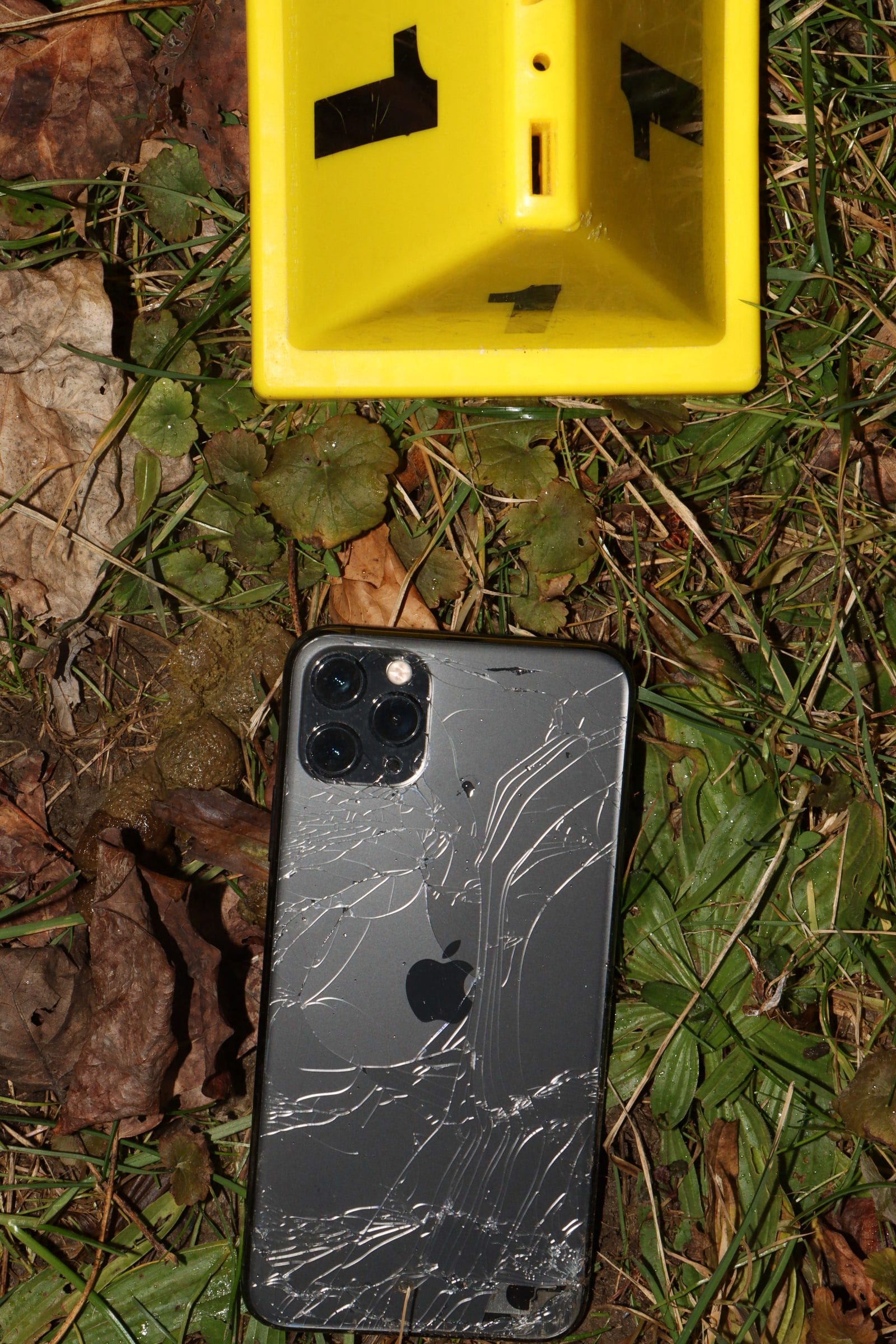
Lourdes Martinez had bought Muniz a black iPhone 11; the line was on her AT&T plan. A judge signed a warrant for the AT&T records, and Muniz's devices went to a Secret Service examiner for extraction. The iPad seized from the bed in the basement, tied to the Apple ID martinlourdes2018@icloud.com, held the evening in outline: a 29-second call to a sister at 6:25, six calls to a cousin between 6:27 and 6:43, two calls to Macho Muniz at 6:35, a video call to Lourdes at 7:18, three more video calls to the cousin ending at 7:32. The last logged call to Cousin Rafael, at 7:21, ran two minutes and forty-four seconds. In between were the calls he did not take: missed calls from Rafael Solis at 6:47 and 6:50, a missed call from Lourdes at 6:52. Sixteen minutes after the last video call, he was standing at 44th and Clark. Eyana's own iPhone was extracted too; nothing on it was relevant to the investigation. The swabs from the broken iPhone in the field yielded no human DNA.
The warrants kept coming. A judge signed one for Muniz's Facebook accounts, and Facebook sent records for both, including the "Jail Break Gaming" account he had messaged in December; investigators reported they were unable to locate messages with Muniz in the Jail Break Gaming records. A preservation request went to Amazon for the Blink cameras inside the house, and a warrant followed a month after the shootings, seeking the stored video from January 13. The detective stated the recordings were necessary to determine locations and movement within the residence before and after the homicide. Amazon provided the video, and it was downloaded and reviewed. That is how the kitchen conversation about dinner survived.
The Charger was searched under warrant five days after it was towed. Detectives swabbed the driver's area, the rear driver's side, the rear passenger side, and the front passenger area, and removed twelve dollars and Anthony Boothe's Fifth Third debit card from the console for safekeeping. The DNA came back family: Angelic matched the driver's area, Jayden the rear driver's side, Jayden and Angelic the rear passenger side, Angelic the front passenger area, with unknown contributors mixed through all of it.
The county forensic laboratory received the evidence from the homicide unit eleven days after the shootings, thirteen items in all. A trace examiner recorded apparent blood on Angelic's blue T-shirt and black sweatpants, on Jayden's white tank top and blue shorts, on Miguel's long-sleeve shirt. No bloodstains and no bullet defects were found on Angelic's black ankle socks. No powder grains were observed in the shave hair from her entrance scalp, and none in the shave hair from her exit wound. The blood swabs from the scene markers matched the people who died there: Jayden at marker 1, Angelic at marker 10, Miguel at marker 17. In the gunshot-residue sample collected from Martin Muniz, a chemist found five particles with a spherical or molten appearance, containing lead, barium, and antimony. The property receipts in the case list a residue kit, buccal swabs, blood swabs, casings, and bullets. No line on them lists a gun.
What Eyana Survived
A relative brought Eyana Boothe to the Child Advocacy Center to be interviewed about the incident. The investigator started with school, favorite foods, the things she liked to do. She was eight. She said she was in the hospital because her head had been shot. She said she had been sleeping in her bedroom and did not know what happened. She said she lived with her parents when she was shot, and that nobody else was in the house. She said she did not know where her parents were.
Where she was that night is the one point the accounts never settled. The first officers into the house wrote that two juveniles, one male and one female, had been shot in the living room. The camera in her bedroom showed her in the room until Cleveland police appeared on it. She herself said she had been sleeping in her bedroom. Every account agrees she was shot in the back of the head inside that house; no later report reconciles the officers' narrative with the camera and her own memory.
Gloria Hernandez went looking for a reason. She arranged a call to Muniz in jail through his cousin and told him she wanted closure, that she needed to know what happened. What she got, she told detectives, was an apology for shooting Angelic, and no apology for anyone else, including Eyana. She also said Muniz told her from jail that he wanted to kill her, and she believed that statement about wanting to kill her may have been the trigger for the incident.
Lourdes Martinez got letters. After one arrived in February 2023 she told him not to send any more. Another came that October; she copied the letter and the envelope and gave the copies to police. She also told detectives that Muniz once said a jail doctor had called him bipolar, and that he did not believe the doctor. She had tried to get him examined herself. He refused.
His surrender in Cleveland reached back a decade. On an October afternoon in 2013, Camden County police were dispatched to North 5th and Cedar Streets for an unresponsive male with an apparent gunshot wound. They found Jaime Molina not breathing and took him to a hospital, where he was pronounced dead at 3:45 p.m. The county prosecutor's office said he died of a gunshot wound to the head, and the investigation had been open ever since. After his arrest in Cleveland, Muniz allegedly gave detectives information about Molina's death. Camden County charged him with first-degree murder. He remained in custody in Cleveland.
In Cuyahoga County, a grand jury indicted Muniz, then 41, on four counts of aggravated murder with capital specifications, along with attempted murder, murder, felonious assault, and having weapons under disability. One detail from the paperwork of that spring: an affidavit seeking Anthony Boothe's medical records noted that Boothe could not sign a release for them, because he had died. Muniz pleaded guilty to four counts of aggravated murder and to one count of attempted aggravated murder of an eight-year-old girl. Court records state that he went through the home and shot each victim before walking outside and flagging down a Cleveland police officer. On the night itself he had told the officers at 44th and Clark that he killed five people. The plea counts four. Eyana is the fifth count, the attempted one.
A judge of the Cuyahoga County Court of Common Pleas sentenced him to four consecutive life terms without parole, with an additional 15 years on the gun specifications to be served first and consecutively, and 11 to 16 and a half years for the attempted aggravated murder, consecutive to the life sentences. He is not eligible for parole. Eyana survived her injuries. At the Child Advocacy Center, she told the interviewer that the first thing she remembered was waking up in the hospital.