The Life Jeramy Gilliam Was Building
The wedding was set for September 21, 2002. Jeramy Gilliam, twenty-six, was going to marry the mother of his young son, and the couple were having a house built in Chesterfield County for the three of them. A down payment had already been made on the house. The date was two months out.
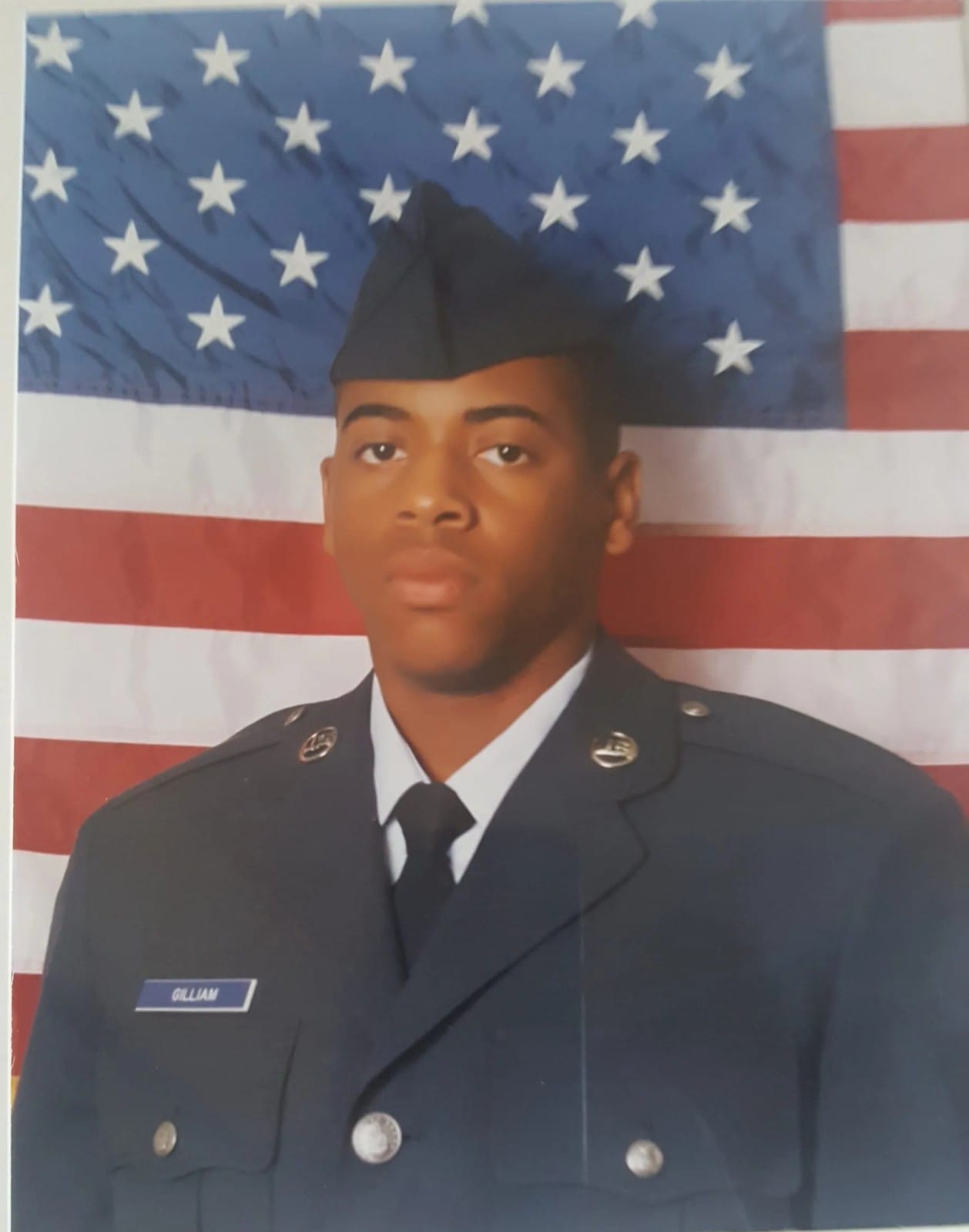
The rest of the plan was already in motion. Gilliam worked at the Wal-Mart Distribution Center in Sutherland, earning between $10 and $12 an hour, according to a person the FBI later interviewed. He attended John Tyler Community College and wanted to study radiology, and he had mentioned taking classes at A-Plus Computer Education for a computer certification. One person told agents he had just started a construction job.
He moved between two worlds an hour apart. He usually lived with his mother or grandmother in Dinwiddie and sometimes stayed with friends in Richmond, one of them a friend from high school, and he kept a mailing address separate from his official one. He drove a Honda that belonged to a relative, and had driven it long enough and far enough that the trips ran to Virginia Beach and Washington. He drove it to Richmond.
The people around him described a settled man. One woman told the FBI he "never wanted for anything," that she and his mother had helped him with his traffic fines, and that he knew he could ask her for money; she knew of no financial problems. Another interviewee said he was not a troublemaker, had never broken into houses, and was not known to carry a gun. One person told agents he did not need to steal, and pointed to the Walmart wage as the reason. Another said he had never once seen Gilliam with a gun. He loved his son, one of them said, and his son loved him.
His last day survives in pieces that do not quite assemble. He went to another person's house early on the morning of July 20. A woman spoke with him by phone between ten and eleven that morning, and again between two and two-thirty in the afternoon, when he was still there. One friend spent part of the day riding around with him before Gilliam dropped the friend at a residence; that friend never heard from him again and learned of his death a few days later. Another interviewee put a drop-off at around five or six o'clock, and told agents that Gilliam said he was drunk when he came home that evening. By that account he took a shower, called the mother of his child, and went to bed. One person believed he spent that night with someone whose name the FBI blacked out before releasing the page. Another had not seen him since Thursday. One interviewee said Gilliam had around $500 in his wallet on the night he was killed.
What happened between that evening and eleven o'clock, no one who knew him could account for. On Sunday morning the Honda was sitting in a friend's driveway with the keys in the ignition. The friend had been home the night before with two other people, a man whose last name he did not know and that man's girlfriend. Gilliam had left the car there before; that was not unusual. What was unusual was that when the friend tried to start it, it would not start, and only later, after another person came by, did it turn over and get driven away. Asked why Gilliam might have been at Idlewood Avenue in Richmond the night before, the friend said he had no information; maybe Gilliam was seeing someone. Another person interviewed put it flatly: he "never went to that part of town."
A Search on Idlewood Avenue
William V. Blackwell had been a Richmond police officer for four and a half years that July, a third-precinct patrolman assigned to the precinct's community-response team. On the night of July 20 he was apparently not wearing his patrol uniform. He wore a two-sided "POLICE" bib and a badge.
The search that put him on the street that night began with a homeowner. She reported that she believed someone had tried to break into her home, and a police neighborhood search was organized. The man police were looking for was heavyset, Black, and wearing a white shirt.
What offense that search was actually about depends on which account is read. The FBI's synopsis and most contemporary news reports said the officer was investigating a nearby burglary and that Gilliam resembled the subject description. A handwritten narrative attributed to a detective said police had responded to a breaking-and-entering call. Later accounts of the encounter likewise describe Blackwell as an officer searching for a burglary suspect. But police also described Gilliam as a robbery suspect, and one broadcast report at the time said Blackwell thought Gilliam could be a suspect in a nearby robbery. Burglary or robbery: the accounts were never reconciled.
At about eleven o'clock, Blackwell saw Gilliam walking in the 2300 block of Idlewood Avenue. Gilliam was on foot. He was 5 feet 8 inches and 164 pounds, according to the autopsy. He was wearing a shirt of a different color from the one described for the suspect, and published reports stated that he did not match a suspect description.
What happened next comes almost entirely from accounts of the man who survived it. Blackwell's version, as it reached the public, ran this way: he asked Gilliam for identification, and Gilliam pulled a gun on him. The two began wrestling. Blackwell said he feared for his life, and he fired.
Police officials filled in the mechanics. The gun, they said, was a .38-caliber Taurus revolver, pulled and pointed at the officer. Acting Captain Darrell Alston, the supervisor at the scene that night, called it a grappling situation. Blackwell was close to Gilliam when the gun came out, Alston said. The officer moved Gilliam's gun and arm to the side while firing his own pistol. Investigators said the two men fought and that Blackwell was forced to fire.
The detective's handwritten narrative put it in three strokes. The decedent became combative when police approached. A scuffle ensued. He pulled a handgun from his clothing.
News accounts at the time carried the same shape: the officer asked for identification, Gilliam drew a pistol and pointed it, and the officer fired and killed him. The officer was not injured.
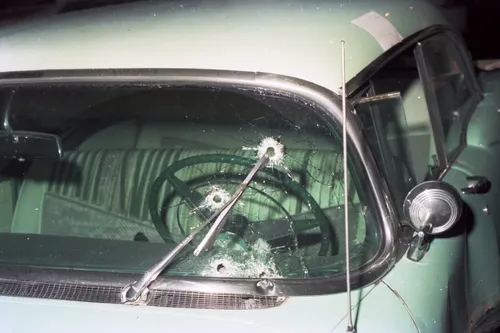
Police officials said a firearm was recovered at the scene. Gilliam was quickly handcuffed while dying or already dead. There were no other police witnesses. Emergency medical services responded, and according to the detective's narrative, pronounced Gilliam at 11:12 p.m.
By 11:12, then, the encounter had exactly two witnesses. One of them was dead. The other was the man who had shot him.
Two Shots in the Back
The preliminary report from the Medical Examiner's office indicated that Jeramy Gilliam had been shot twice in the back.
That was the detail the struggle account now had to carry. Police officials contended that Blackwell had fired into Gilliam's back while fearing for his life. The FBI's record of the allegation put the shots at close range; other reporting rendered it as point-blank.
The finding moved unevenly through the city. Richmond Commonwealth's Attorney David M. Hicks said he had not heard that Gilliam was shot in the back. The police department, in a statement, said it had reviewed the preliminary report and that "the location of the wounds are consistent with the nature of the struggle that occurred between Officer Blackwell and Mr. Gilliam."
The final autopsy report was prepared in mid-August. The autopsy showed that Gilliam died from two gunshot wounds to the back. His state death certificate read, "Shot by police during arrest."
The Virginia Division of Forensic Science found ethanol in his blood at 0.15 percent by weight by volume, and at 0.20 percent in the vitreous sample. The medical examiner said his blood alcohol level was .15 at the time of his death and had recently been as high as .20. The toxicology found nothing else. No opiates. No cocaine or benzoylecgonine. None of the other listed drugs.
The residue testing gave one small result. On the samples from Gilliam's right and left hands, the analysis found one particle indicative of primer residue on each.
Then there was the gun itself, a .38 Special Taurus revolver. The state laboratory examined it that summer, with results addressed in a Certificate of Analysis dated September 6. Forensic reports indicated that no fingerprints were found on it. Gilliam was not the person who had bought it at a gun show. DNA analysis suggested a high probability that the gun had previously been in his grasp; a later news account rendered the same ground more narrowly, reporting that partial DNA evidence on the gun did not eliminate him as someone who had handled it.
That fall, the Richmond police sent the revolver back to the laboratory along with its five cartridges, and a report dated October 18 recorded the results, with Gilliam listed as the victim. No blood was observed on the cartridges. No human DNA was detected on the swabs taken from them. No DNA typing could be conducted, because no amplified product was obtained. The findings landed one after another, and each of them was nothing.
One measurement in the record needed explaining. Published reports said the gun police alleged Gilliam had pointed at Blackwell was found 35 feet away from his body, without his fingerprints on it. To test whether a man could throw a revolver that far, the medical examiner went back to the scene and took part in a recreation of a gun toss, along with four other people. When it was over, the medical examiner was satisfied that Gilliam could have thrown the weapon the reported distance; another participant said the same. That is where the recreation's authority ended. It established that the throw was possible. Whether it happened, no test could say, and none did.
A Family Asks for an Independent Review
"And I don't understand how he could get shot in the back if he's aiming a gun at the police officer," Thomasine Gilliam said. She lived in Dinwiddie; Jeramy was her son. She said she had never known him to carry a gun.
Her dealings with the department had not reassured her. "When that detective came here, he didn't tell me about a struggle," she said. "Somehow, stuff has gotten added on." A Richmond investigator and a deputy commonwealth's attorney went to her home to discuss the case. She and her husband repeatedly tried to contact detectives and police officials. "The police won't talk to us," she said. "We need some answers." Another woman the FBI interviewed described the family's practical straits in the same period: her immediate main concern, she said, was "trying to obtain a copy of the police report and death certificate" for Jeramy's life insurance company. The funeral had involved expenses.
Three weeks after the shooting, a representative of the Virginia State Conference of the NAACP asked the FBI to conduct an independent review and analysis of the case; the request came from the state conference and the Richmond branch together. The requester was concerned about the autopsy report indicating that Gilliam had been shot twice in the back, and, according to the FBI's report, believed the autopsy findings and subsequent information were inconsistent with the police department's initial account. Two days later, FBI Richmond notified the police department that it would review the shooting, and the Richmond office agreed to investigate whether Gilliam's civil rights had been violated. The bureau classified the matter as significant: a law-enforcement officer's violent action against a subject, resulting in the subject's death.
In early September, agents interviewed the NAACP representative. His understanding, he said, was that Gilliam had been surprised by an officer during the neighborhood search, that Gilliam pulled a gun, that a struggle occurred, and that the officer shot him twice in the back. Friends of the family, he said, insisted Gilliam was not the type of individual who would wield a gun or pull one on a police officer, though the representative had not talked to the family himself. He offered agents one lead: a minister whose congregation members might have heard something. He said the shooting had drawn less media attention and public outcry than earlier Richmond police shootings because there were allegedly no witnesses, and he said there were no reports of drugs in Gilliam's possession.
The case did not sit alone. Salim Khalfani, the state NAACP's executive director, wrote that the killings had raised questions about the Richmond Police Department and its training, leadership, management, recruitment, and hiring policies. The FBI's inquiry took in Gilliam's shooting and four earlier fatal shootings by Richmond officers. That same season, a grand jury returned an involuntary manslaughter indictment against Richmond Detective David Melvin in connection with a May shooting of an unarmed man. The department was continuing its own internal investigation of the Gilliam case and other fatal use-of-force incidents, with Internal Affairs and its criminal unit both at work. A vote on a proposed citizen review board ordinance was postponed until sometime in November.
The department turned over its file. A lieutenant assembled a notebook containing the medical examiner's preliminary report, police reports, witness statements, officer notes, and photographs; he provided the statements taken from the officer who fired, and video and audio tapes of the interviews with police witnesses.
That November, a subpoena to testify before a federal grand jury issued from the Eastern District of Virginia, on application of the United States, over the name of U.S. Attorney Paul J. McNulty. It directed the recipient to the Lewis F. Powell, Jr. Courthouse in Richmond; the bureau's file also preserves a subpoena served on the Richmond Police Department itself. The machinery was full-scale by then. What it lacked was the one thing no subpoena could produce: a third witness to the seconds on Idlewood Avenue.
The Case Closes, and Blackwell Remains
A Richmond grand jury heard the evidence and cleared Blackwell, and no city charges were to be brought. The decision shocked Gilliam's parents. Khalfani called it "a travesty." Blackwell, who had been placed on administrative leave with pay immediately after the shooting, later said the leave lasted three months while local and federal authorities investigated.
Police Chief Andre Parker had announced an independent third-party review after Gilliam's death. The study was called off on the advice of then-City Attorney Jim Rupp, after a firm had already been selected to conduct it. Hicks, the commonwealth's attorney, had said the study was necessary to maintain trust and credibility.
The federal case ended in January 2003, when an Assistant United States Attorney reviewed the file and declined prosecution, and the special agent in charge closed the matter on that recommendation. The same week, prosecutors declined charges against two other Richmond officers under review, and that matter closed the next day. Blackwell was not charged in Gilliam's death.
Then came the career. In October 2003, the Retail Merchants Association of Greater Richmond and the Greater Richmond Chamber of Commerce presented Blackwell with a valor award for shooting Gilliam. He was promoted to sergeant two years later. In 2009 he became head of the department's Confidential Informant Program; he later said that as a narcotics lieutenant he managed the program and its paperwork. Problems in that program uncovered by the U.S. Attorney's Office prompted an FBI investigation in 2014. Federal authorities chose not to prosecute a detective named Jason Norton, a special prosecutor brought in from Virginia Beach declined charges as well, and confidential settlements meant there was no further probe into Blackwell's involvement or potential culpability. "At no time while assigned to the Special Investigations Division did I supervise Norton," Blackwell said, "nor did I approve or supervise any of his operations." The lieutenant who took over the unit in 2012 said it had since "tightened the reins" and implemented policies that had not previously been followed. Blackwell went on to command the Fourth Precinct, which won Precinct of the Year for crime reduction three years in a row.
In June 2020, Mayor Levar Stoney appointed William "Jody" Blackwell interim chief of the Richmond Police Department, choosing him to replace William Smith. Blackwell had spent over two decades on the force by then, a career filled with awards and recognition from colleagues. "I'm proud to work alongside the men and women of the Richmond Police Department," he told the city. Stoney said, "I'm aware of Chief Blackwell's record and I support the chief." The Virginia Association of Chiefs of Police said he had served the department and the community with dedication and professionalism. A resident who lived near the shooting said of 2002, "The way he responded, he responded in an instant and I think he should be commended because it could have been him laying down on the ground."
Gilliam's family wrote an open letter saying they were shocked to learn Blackwell was now the interim chief: "We had no doubt about the integrity of Mr. Blackwell, now we question Mayor Levar Stoney's integrity. Maybe it's time for him to step down!" Thomasine Gilliam said she was shocked he had risen through the ranks. "But they look out for each other," she told 8News.
His time in the office was short. He later wrote that he was no longer the interim chief and would submit a letter requesting to return to his former position as a major, that he had not been told who would replace him, and that he prayed he had not "serve as a disappointment"; he asked the department's personnel to "keep the good fight." A police spokesperson confirmed he was no longer interim chief but did not say whether he had resigned.
But the question had already been put to him, on the day he first addressed the city as its chief, when reporters asked about the man he shot in 2002. He said Gilliam's family bore a great burden. He declined 8News' request for an interview, and a department spokesperson said the information about the shooting was part of the chief's personnel file and not subject to release. "It is a completely different situation," Blackwell said. "As I said before, I am not going to go into any details associated with it because that is not what we are here for today."
What the Public Record Still Cannot Say
In the FBI's file, Jeramy O. Gilliam appears as the deceased victim in a civil-rights investigation: color of law, force and/or violence. The synopsis carries the allegation in two clauses, that Gilliam produced a firearm and a struggle ensued, and that the officer shot him twice in the back at close range. The name of the officer is a redacted box. The case is marked closed. The findings of the investigation were never released.
In the pages that survive, the man himself is rendered the way a federal file renders anyone. A victim-notification form marks him deceased and the victim. A date of birth: January 19, 1976. An address on Cox Road in Sutherland.
What the public has of that file came out slowly. The bureau acknowledged a records request concerning Gilliam in the summer of 2020, and said the responsive documents would be posted to its electronic FOIA Library when the release was complete. Its final answer arrived in December 2023, in a letter to Whittney Evans of MuckRock News: review completed, 385 pages reviewed, 82 released, with documents concerning another government agency referred to that agency for its own response. The file's own accounting lists 135 deleted pages.
The released pages preserve the two accounts and the forensic edges around them, and they preserve the gaps. They do not say why Gilliam was on Idlewood Avenue that night; nobody the FBI interviewed knew. They do not reconcile the white shirt police were looking for with the different-colored one Gilliam was wearing. And of the seconds in which two shots entered his back, they hold only the account of the man who fired, because the only other witness did not survive it.
Gilliam's mother has said what those gaps amount to. "Time is going on, and I really miss my child," she said. "It took everything I had left to hold on to." And of the answers she and her husband went looking for and never got: "I'm still in the dark."